
New Investors in People research suggests organisations may be measuring belief in trust rather than the everyday behaviours that show whether employees feel able to speak up, admit mistakes and raise concerns early.
- 61% of employees regularly “cover themselves” at work, for example by keeping emails or screenshots
- 65% have avoided raising or speaking openly about something at work in the past six months
- 49% of HR leaders say employees raise issues early when things go wrong, yet 25% of employees say they would try to fix a mistake or problem quietly before telling anyone
- One in five employees say trust depends heavily on who their manager is
LONDON, 8 June 2026 – HR leaders could be overestimating levels of trust inside their organisations, according to new research from workplace culture and performance specialist Investors in People, which reveals a gap between how trusted workplaces appear on the surface and how employees behave day to day.
The research, conducted by Censuswide for Investors in People among more than 1,000 employees and 500 HR leaders, finds that trust is widely recognised as critical. Almost all employees, 93%, say trust is important at work, rising to 100% among HR leaders. More than half of HR leaders, 55%, say trust is essential. The research also finds that 82% of HR leaders believe people are completely or mostly trusted to use their judgement at work.
Yet the employee behaviour data points to a more complex reality. Some 61% of employees say they regularly “cover themselves” at work, for example by keeping emails or screenshots, with 32% doing so most weeks. Almost two-thirds, 65%, have avoided raising or speaking openly about something at work in the last six months.
The findings suggest that many organisations may be talking about trust more confidently than employees are experiencing it in practice.
Eddie Salmon, chief operating officer at Investors in People, says: “HR leaders are often the champions of trust inside organisations. But the danger is that organisations can end up trusting the idea of trust, rather than in the behaviours that signal trust is really there.
“Trust is not what people say in a survey or what appears in a values statement. It is what people feel safe enough to do. Do they speak up early? Do they admit mistakes? Do they challenge decisions? Do they raise workload concerns? Do they feel able to question manager behaviour?
“When employees are keeping evidence trails, avoiding difficult conversations or trying to fix mistakes quietly before telling anyone, that tells HR something important. It suggests people are managing risk around themselves, even in organisations where leaders may believe trust is strong.”
Employees are staying silent about the issues HR most needs to hear
The areas employees most commonly avoid raising include workload or burnout, manager behaviour, disagreement with decisions, ideas that challenge current ways of working and organisational change.
Almost half, 49%, of HR leaders say employees raise issues early when things go wrong, yet a quarter of employees say they would try to fix a problem or mistake quietly before telling anyone.
Salmon says: “For HR leaders silence is one of the biggest warning signs. It can be easy to read silence as acceptance, resilience or alignment. In reality it can mean employees have decided that speaking openly feels too risky.
“If people do not trust that speaking up will lead to meaningful action the organisation loses the chance to fix root causes.”
Low trust is weakening commitment and performance
The research also finds that low trust changes how employees behave. When trust in leadership or the organisation is low employees are most likely to focus on protecting themselves (29%), do only what is required (25%), look for another job (19%) or avoid taking risks and initiative (19%).
HR leaders recognise the performance risk. Nearly half, 48%, say reduced productivity is one of their biggest concerns when trust is low in teams, while 37% are concerned about lower engagement.
Salmon continues: “Low trust affects performance because it changes how people show up. It makes them more cautious, less open and less willing to take initiative.
“If employees are protecting themselves, doing only what is required or withholding concerns, the organisation loses energy, ideas and early warning signals. These behaviours can sit beneath the surface for a long time before they show up in performance data.”
Managers and change are key trust tests
The research points to the critical role managers play in shaping whether employees experience trust in practice. More than a third, 37%, of employees say they would speak to their manager first if something went wrong at work. However, one in five say trust in their organisation depends heavily on who their manager is, and the same proportion have avoided speaking up about concerns over manager behaviour.
HR leaders identify poor leadership behaviour (37%), inconsistent communication during uncertainty (29%) and inconsistent manager capability (26%) as the biggest near-term risks to trust. A third, 33%, of executive-level respondents say they have avoided speaking up about mistakes they made at work, compared with 14% of employees overall.
The research also finds a gap between how HR leaders believe change is communicated and how employees experience it. More than half of HR leaders, 53%, say decisions affecting employees’ roles or teams are explained with reasoning and context, compared with 34% of employees. Meanwhile, 35% of HR leaders say potential changes are discussed with employees before final decisions are made, compared with 24% of employees.
Salmon says: “Employees do not experience trust as an abstract organisational value. They experience it through the person they report to, the decisions that affect them and the way concerns are handled.
“Trust becomes most visible during change. When change feels like something done to people, rather than something they are guided through, trust can erode quickly.”
Investors in People recommends HR leaders strengthen trust by measuring the behaviours that reveal whether people feel safe to speak up, equipping managers to build trust consistently and involving employees earlier in decisions that affect their work.
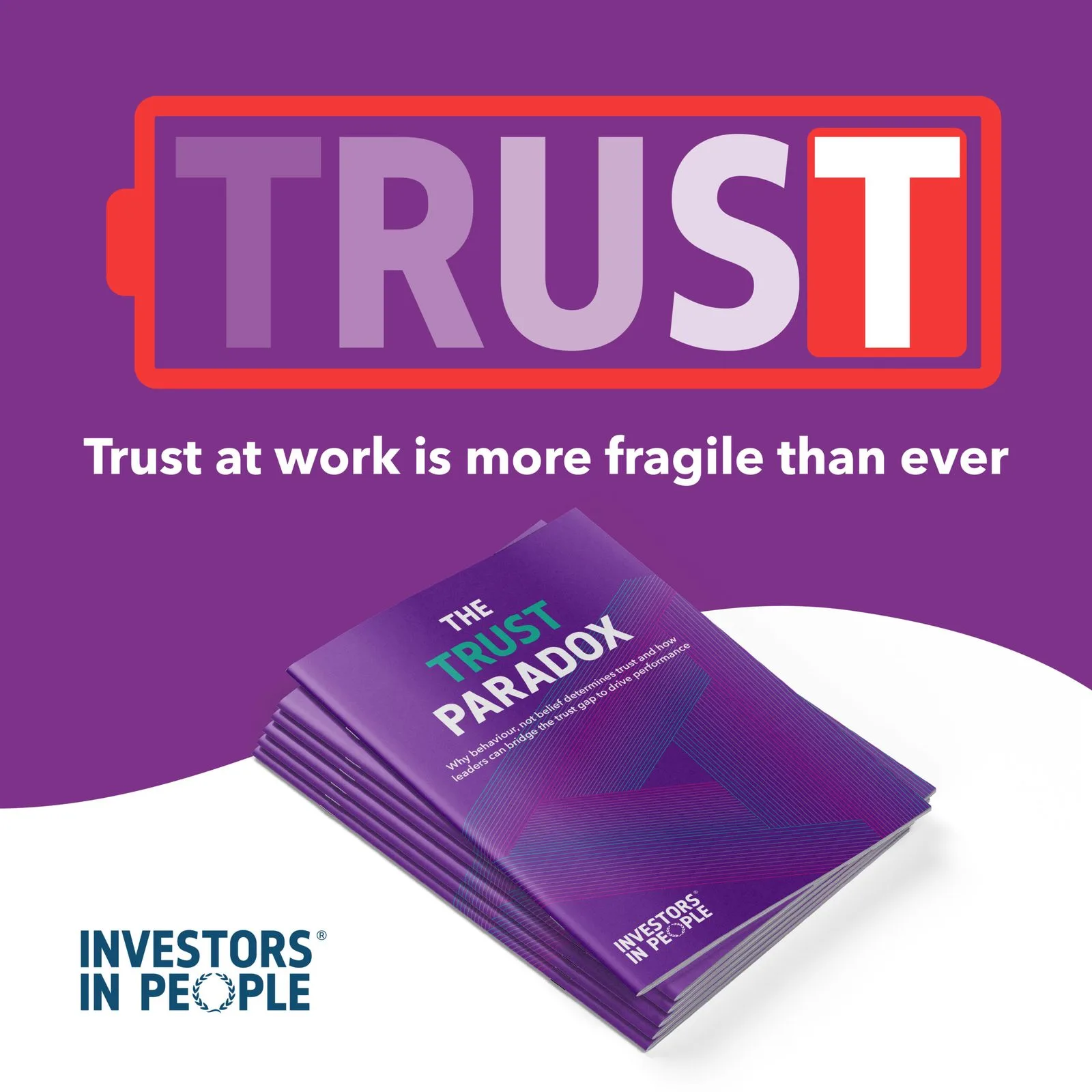
The full whitepaper, The Trust Paradox: Why behaviour, not belief, determines trust and how leaders can bridge the trust gap to drive performance, is available to download here.
About Investors in People
Investors in People helps organisations make work better by improving the everyday practices that shape how people are led, managed, supported and developed. Its framework assesses the organisational conditions behind trust, transparency, employee involvement, management capability, performance and continuous improvement. Delivered by experienced practitioners, the framework gives employers independent analysis, actionable feedback, and a practical route to stronger workplace cultures and better long-term results. Since 1991 Investors in People Community Interest Company has worked with more than 59,000 organisations across the globe.